【日時】11月28日(金) 10:30~12:00
【場所】国立天文台・三鷹 北研1階講義室
【タイトル】準汎用並列計算機GRAPE-DR用制御プロセッサの開発および性能評価
【発表者(敬称略)】小池 邦昭(総研大D2 ・三鷹、指導教員 牧野 淳一郎)
自己重力多体問題は球状星団や銀河などをモデル化する方法として有力な手段である。重力相互作用は無限大の到達距離をもっているためにすべての質点にかかる重力を計算する必要がある。この相互作用の計算量は粒子数の2 乗に比例するために多大な時間を要していた。このような問題を解決するため、重力の計算のみを高速に計算できる専用計算機GRAPE-1が開発された(Sugimoto.et.al,1990)。
このGRAPE-1から6までのGRAPE型の計算機の特長はパイプライン構造の専用回路を多数並列化することで高性能化を実現している。それに対して現在開発中のGRAPEDRはプログラム可能な512個の小規模な演算器を1個の演算プロセッサに集積する方法を
とっている(Makino,2005)。このためGRAPE-DRは演算プロセッサを制御するための制御回路が別途必要になる。本研究ではこの制御プロセッサの実装を行い、重力相互作用の計算を実機で行い性能評価を行った。現時点では重力相互作用では1ボードあたり420Gflops の処理性能が実現されている。最適化は今後の課題である。
またGRAPE-DR では演算器のプログラムを変更して密行列の計算を高速化することにより大規模な連立1次方程式を解くことが可能になっている。
密行列用に最適化された制御回路を用いて、並列LU分解用ソフトウェアであるHigh Performance Linpack(Petiet.et.al,2004)を高速化した。
発表では重力相互作用およびLU 分解の高速化に関する性能評価結果について発表し、今後の展望について述べる。
投稿者「guas-writer」のアーカイブ
銀河系棒状構造の運動学的検証に向けて
【日時】11月21日(金) 10:30~12:00
【場所】国立天文台・三鷹 北研1階講義室
【タイトル】銀河系棒状構造の運動学的検証に向けて
【発表者(敬称略)】松本 尚子(総研大 ・三鷹D1、指導教員 本間 希樹)
銀河系のバルジおよび中心領域に関して、過去の可視光や近赤外の測光観測より、銀経方向に偏りのある輝度分布をしていることが知られており、三軸不等の棒状構造の存在が支持されている。その軸比は1:0.6:0.4 (Binney et al. 1997) などといわれている。また、棒状構造の長軸の向きは太陽から銀河中心方向に対して、20 °±10 °程度の傾き(cf. Binney et al. 1997; Dwek 1995) を持っているといわれている。これらの観測から、棒状構造の大体の傾向は捉えられているといえるが、不確定性は大きい。別のアプローチとして、銀河系中心およびバルジ領域中の晩期型星に付随するSiO メーザーのサーベイ観測が野辺山45m 電波望遠鏡によって多数行われている(cf. Izumiura et al. 1999; Deguchi et al. 2000,2004)。そして、SiO メーザー源の視線速度から、これらの天体が3kpc arm などをトレースしている可能性が示されている。他にも、OGLE-II やHST をはじめとする可視光や近赤外線望遠鏡によって、数年から数十年かけて星の天球面上の相対固有運動が測定されているが、領域や観測精度の制限が大きく、また、相対的な運動しか求められていない。したがって、銀河系棒状構造の運動学的な検証がすでに十分行われているとはいえない。
今回の発表では、銀河系棒状構造の運動学的検証のために我々が計画しているメーザー源を用いたVLBI 観測による絶対三次元固有運動測定の可能性と、現在の進捗状況・今後の展望について報告する。
低光度セイファート銀河における星形成活動の寄与
【日時】11月14日(金) 10:30~12:00
【場所】国立天文台・三鷹 北研1階講義室
【タイトル】低光度セイファート銀河における星形成活動の寄与
【発表者(敬称略)】大井 渚(総研大 ・三鷹M2、指導教員 今西 昌俊)
活動銀河核(AGN) とは母銀河と同等がそれ以上のエネルギーを銀河中心から放射している天体で、輝線幅から2 つのタイプ(1 型,2 型)に分類されている。莫大なエネルギーを放つエンジンとして、中心に存在する超巨大ブラックホール(SMBH)による重力開放エネルギーが考えられている。しかし、物質を効率よく降着させるメカニズムについては未だ解明されていない。近年、中心付近で起こる爆発的星形成活動(SB)が強い影響を及ぼしている可能性があると考えられているが、SMBH からの放射が非常に強いためにその影響を調べることは困難であった。
これまでの研究から、近傍の高光度セイファート銀河においては、星間空間に広く分布する多環芳香族炭化水素(PAH) の輝線や星の大気に含まれるCO 分子の吸収帯を用いることで、星からの放射をAGNからの放射から分離し、AGN規模と中心部でのSB の規模に強い相関があることがわかっている。
そこで我々は、ハワイ島マウナケア山頂にあるNASA の望遠鏡IRTF/SpeXを用いて、LINER に近い低光度セイファート銀河8天体、先行研究でSB の影響が強いと思われる高光度セイファート銀河8天体について近赤外K,L-band 同時分光を行った。その結果、低光度セイファート銀河においてもSB 規模はAGN と良い相関を持っていることがわかった。
これはSB がAGN の活動に大きく影響を及ぼしていることを示唆している。
しかしCO 吸収から求めた星光度が、セイファート1型・2型銀河で大きく異なるという結果を得た。また2型セイファート銀河については、PAH輝線強度から見積もられた星光度に対し、CO 吸収から見積もられた星光度の方がはるかに大きいという結果となった。この結果から、PAH輝線とCO吸収帯は別のものを見ている可能性があることを示唆している。
本コロキウムでは、観測と解析の結果を報告し、これからの展望について発表する。
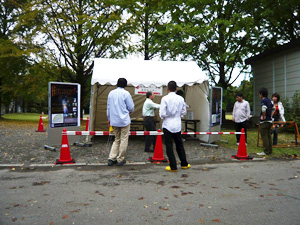
特別公開総研大企画「総研大生による天文台ツアー」報告
今年2回目となる、総研大企画。
昨年に引き続き、ガイドツアーを催しました。
Tνを考慮したSupernova Relic Neutrinoの検出率について
【日時】11月7日(金) 10:30~12:00
【場所】国立天文台・三鷹 北研1階講義室
【タイトル】Tνを考慮したSupernova Relic Neutrinoの検出率について
【発表者(敬称略)】鈴木 重太朗(総研大D1 ・三鷹、指導教員 梶野敏貴)
観測的宇宙論における最近の関心事の一つに大質量星の形成率があげられる。
大質量星の形成率を時間的に遡って調べるための手段としては、これまでに用いられてきた紫外線のほかに、最近のニュートリノ検出装置の性能向上により、2 型超新星爆発の際に多量に放出されるニュートリノ(SRN)のエネルギースペクトルを使って調べる方法が用いられ始めている。
但し、SRN を使って大質量星の形成率を調べる方法にはいくつかの問題点があり、その一つとしてニュートリノのフレーバー毎の温度が明らかになっていないことがあげられる。本研究では、軽元素に関する銀河化学進化(GCE) を用いて、SRN 検出率におけるニュートリノ温度由来の不確かさを取り除く方法を提案する。
具体的にはB(11)がType-2 超新星と宇宙線の両方によって合成されるのに対し、B(10) は宇宙線によってのみ合成されることを用いると、フレーバー毎のニュートリノ温度を推定することができ、SRN のエネルギースペクトルをより精密化することができると考えられる。今回の発表では、本研究の概要・手法および結果の一部について述べる。